THE ACHILLES’ HEEL OF EVERY SYSTEM
No matter how big.
No matter how expensive.
No matter how sophisticated.
Every component has the same weakness.
It must let energy in.
POWER enters. SIGNALS enter. VIBRATION enters. FIELDS enter.
The problem is not that the component is poorly designed.
The problem is that no component operates in isolation.
Everything is relative and reactive to each other.
Every component is part of a larger electrical and mechanical ecosystem.
And every connection is a doorway.
“ THE PROBLEM IS ALL INTERNAL”
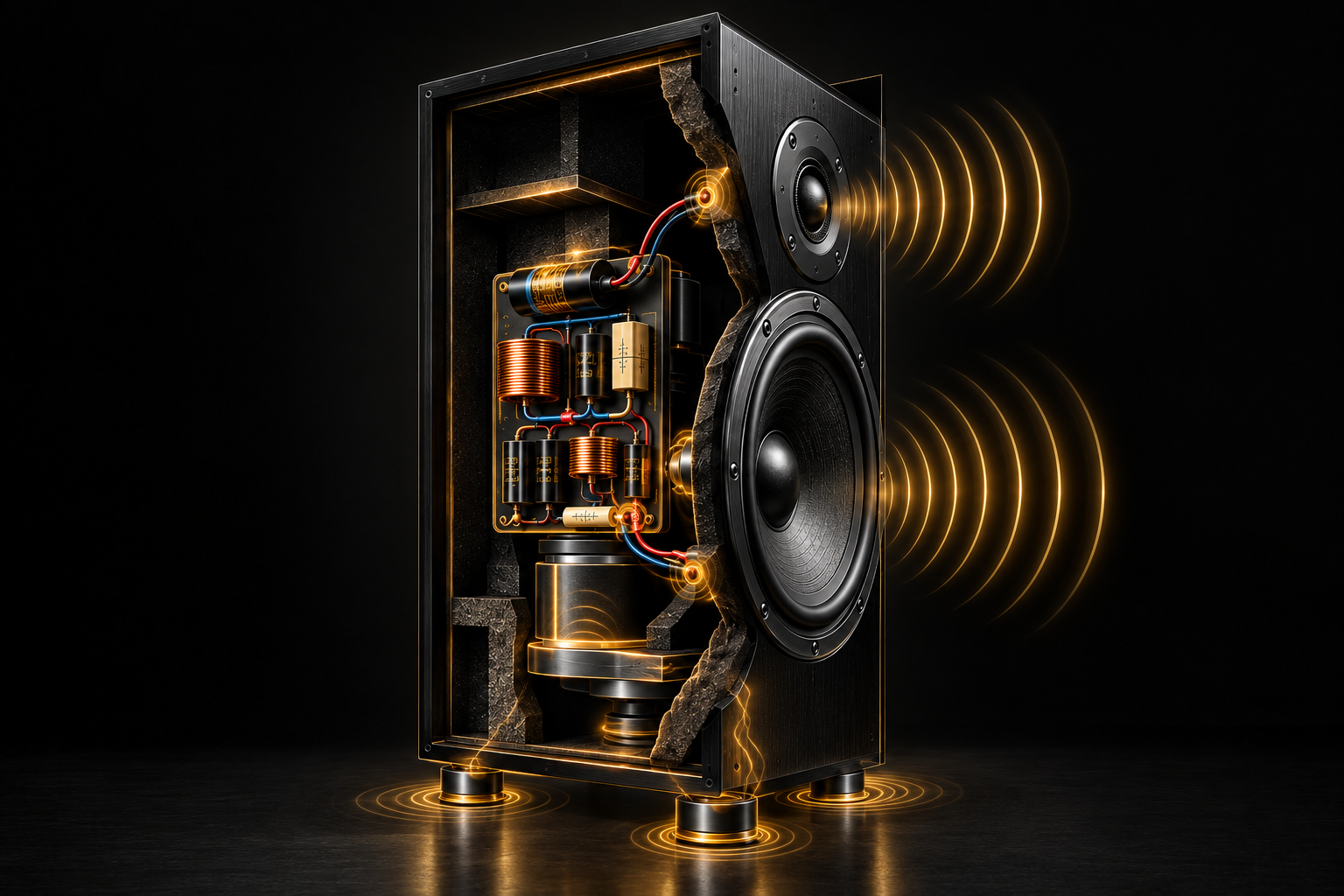
LOUDSPEAKER The Crossover Energy storage, phase interaction, impedance variation and mechanical vibration.
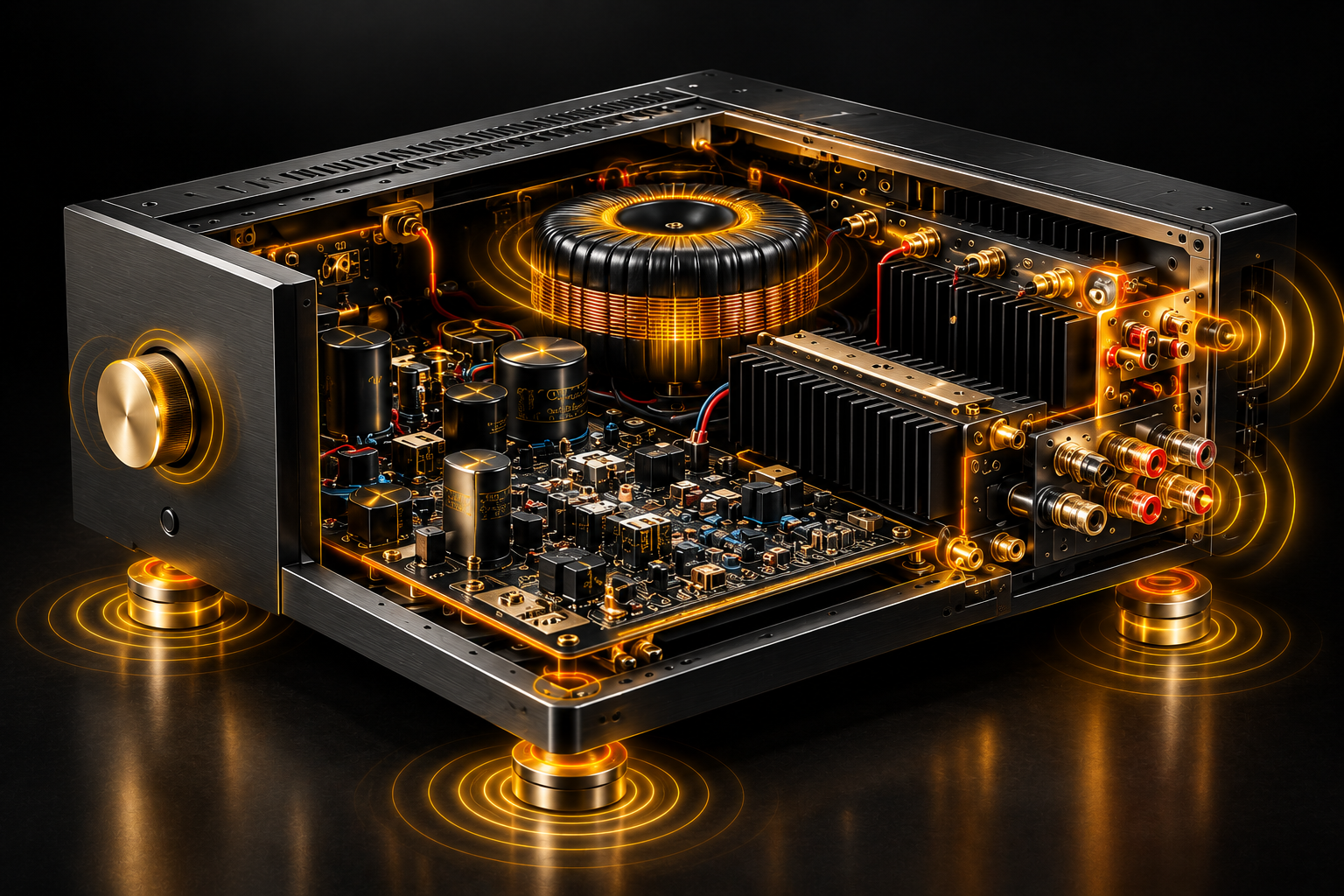
AMPLIFIER Power & Reference Power supply interaction, grounding, return currents and electromagnetic fields.
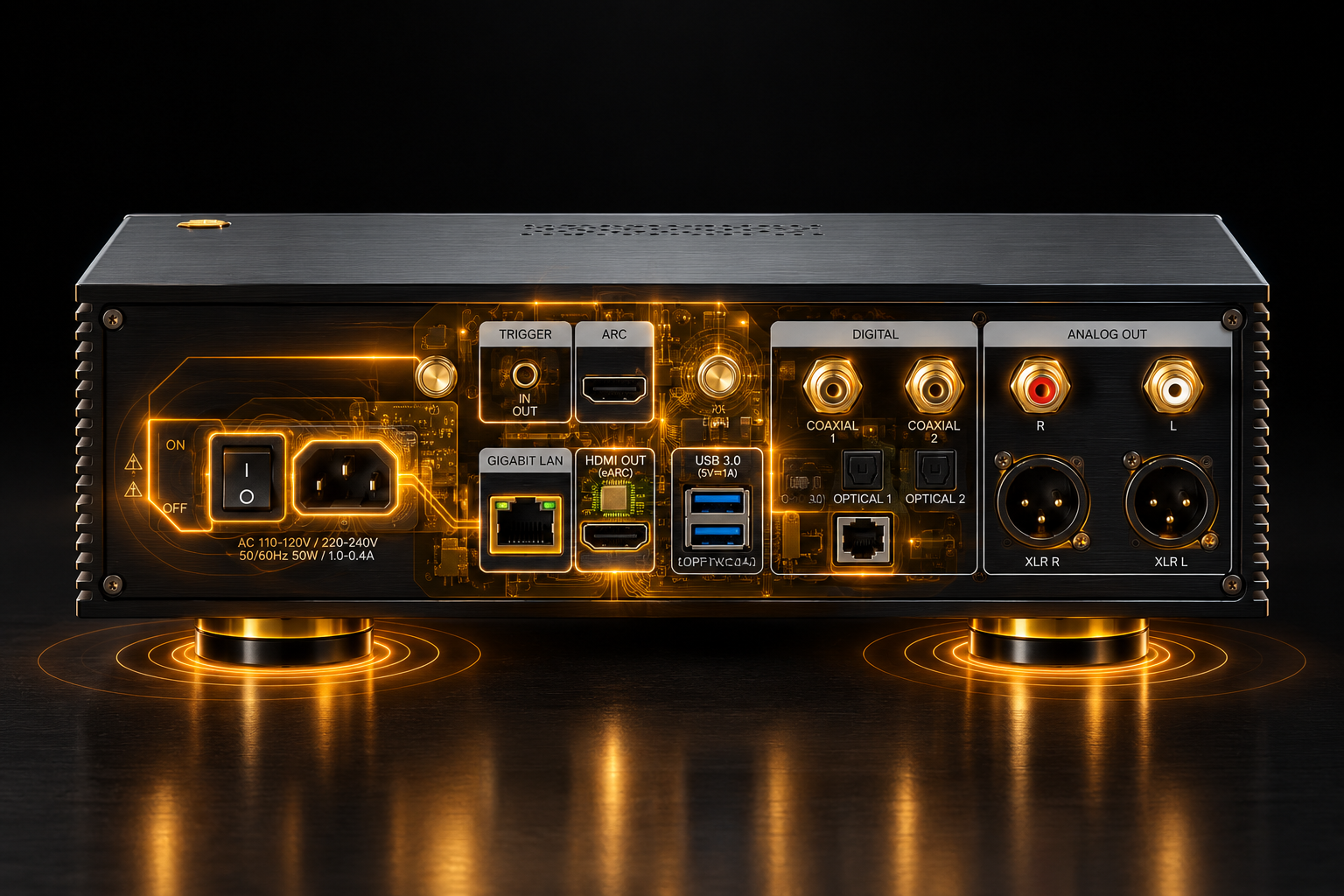
DIGITAL COMPONENT Electrical Environment Power, electromagnetic interaction, signal reference and high-frequency noise.
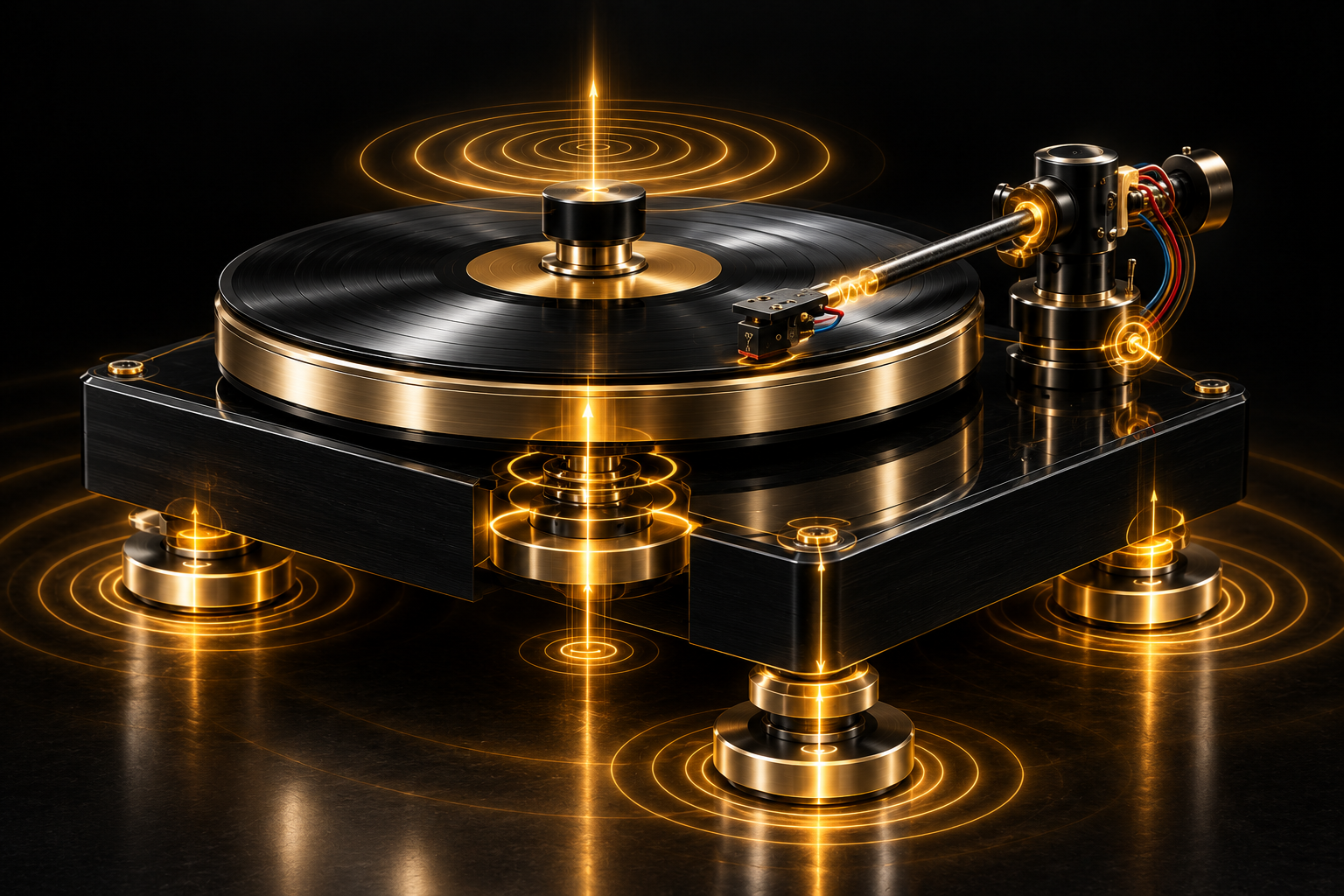
TURNTABLE Mechanical Interface Vibration, bearing energy, structural resonance and environmental feedback.
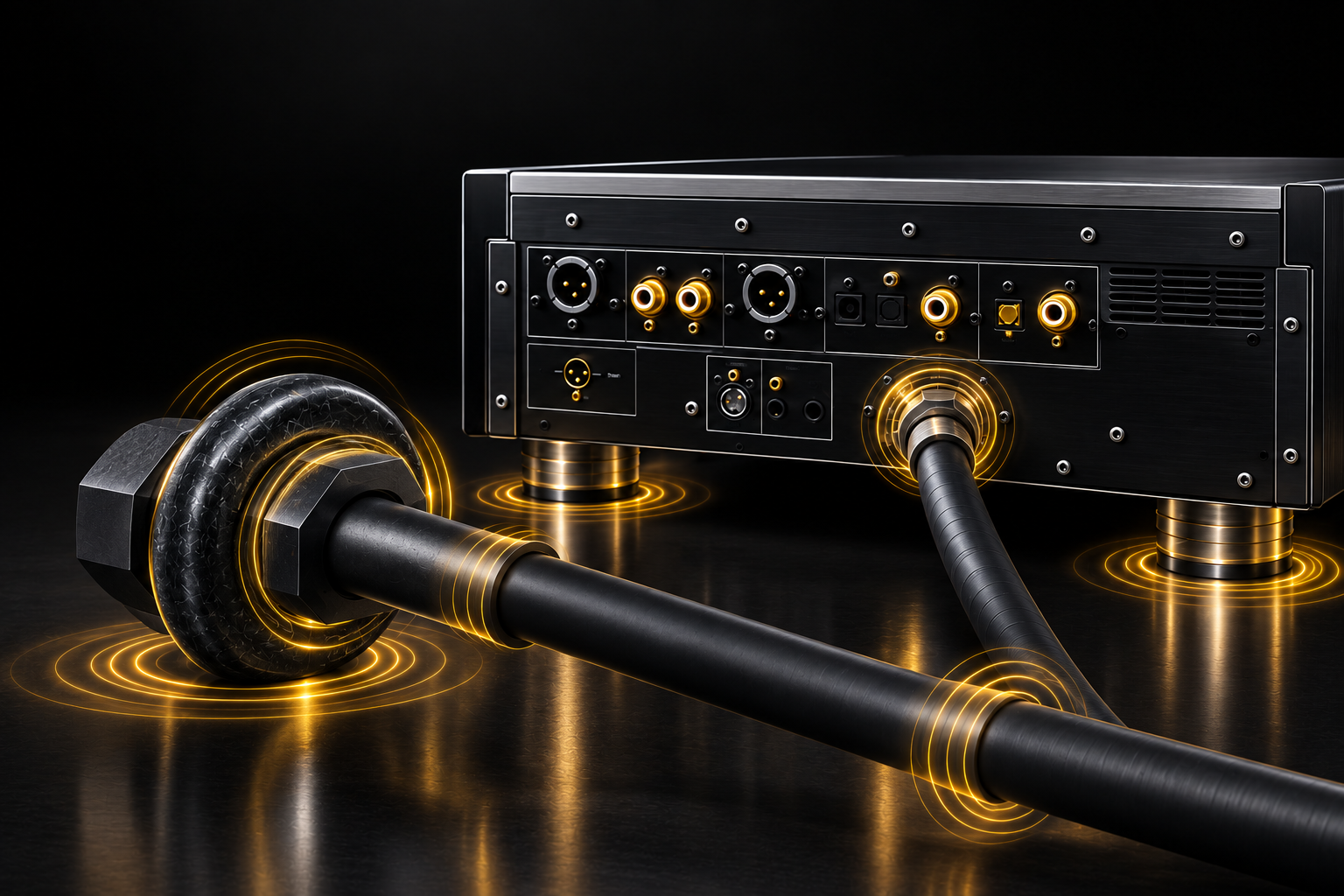
CABLE INTERCONNECTION The Transmission Path Signal integrity, electromagnetic interaction, contact resistance and return-path behaviour.
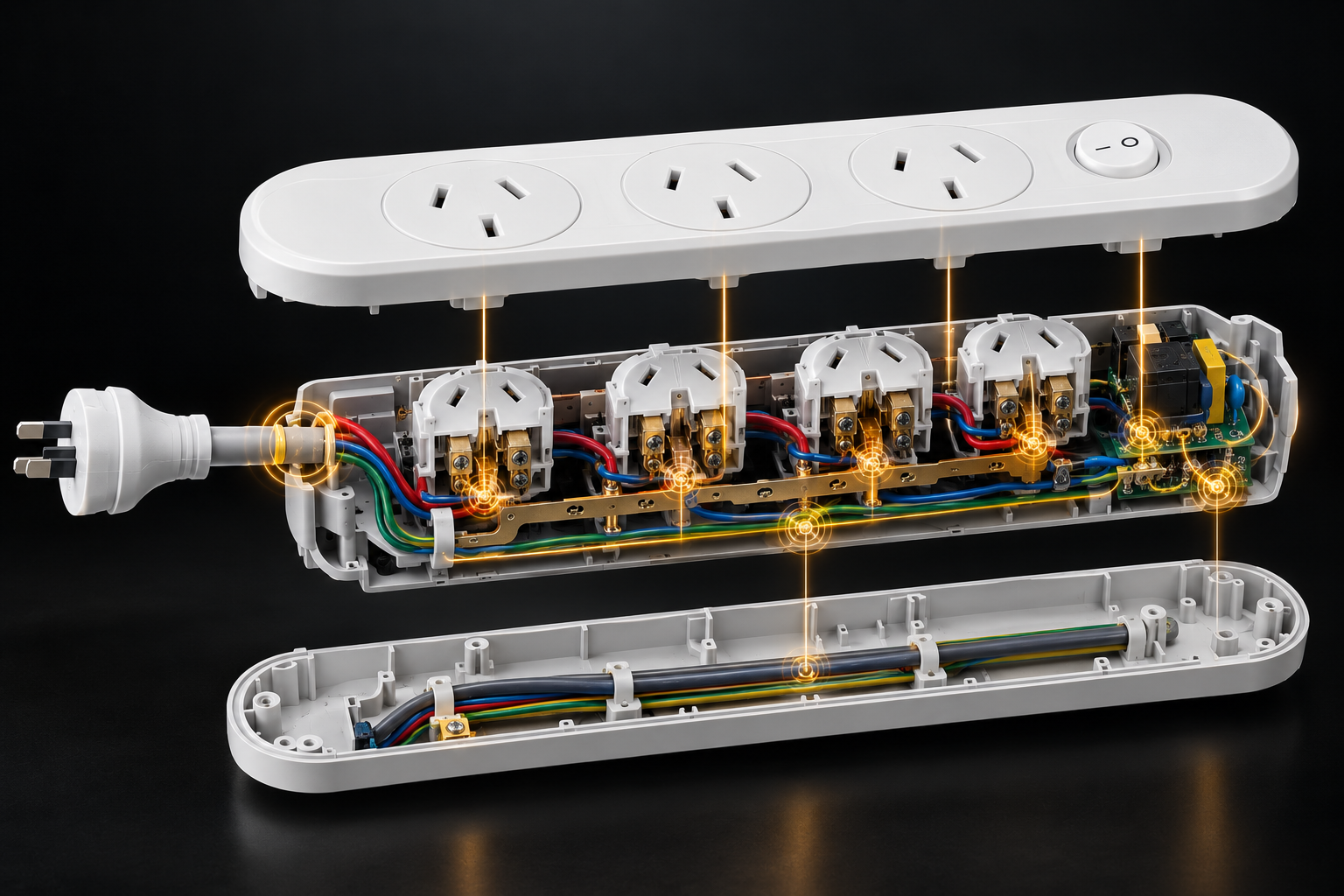
POWERBOARDS The Distribution Network Power distribution, connection integrity, shared return paths and electromagnetic interaction.
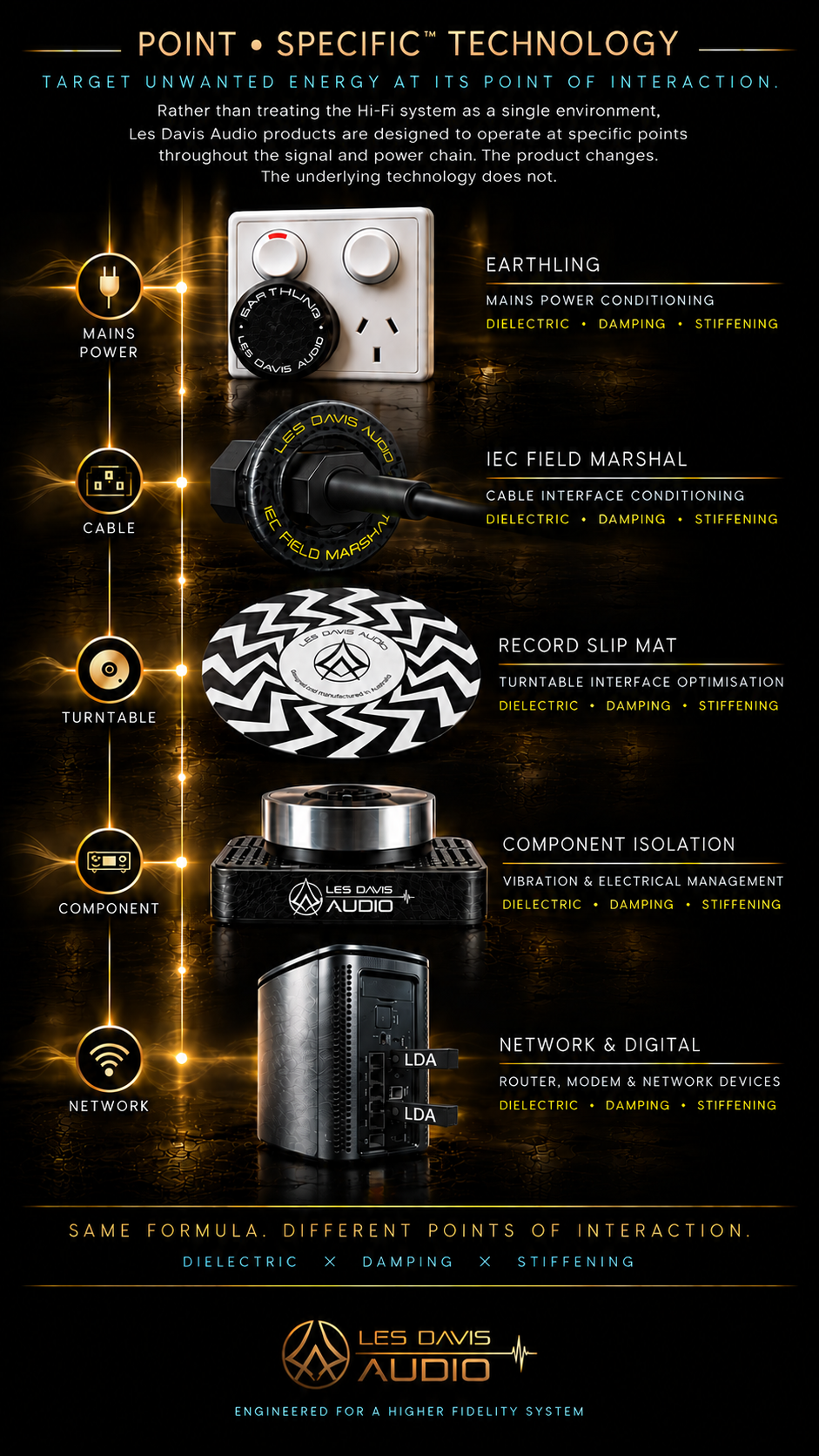
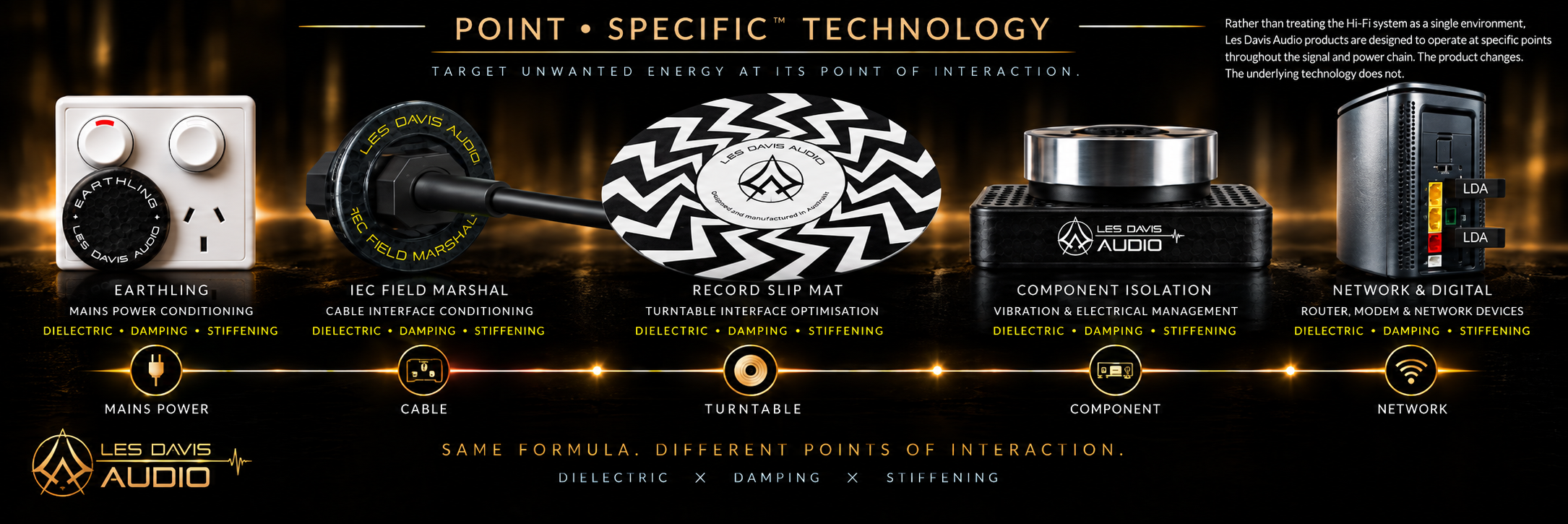
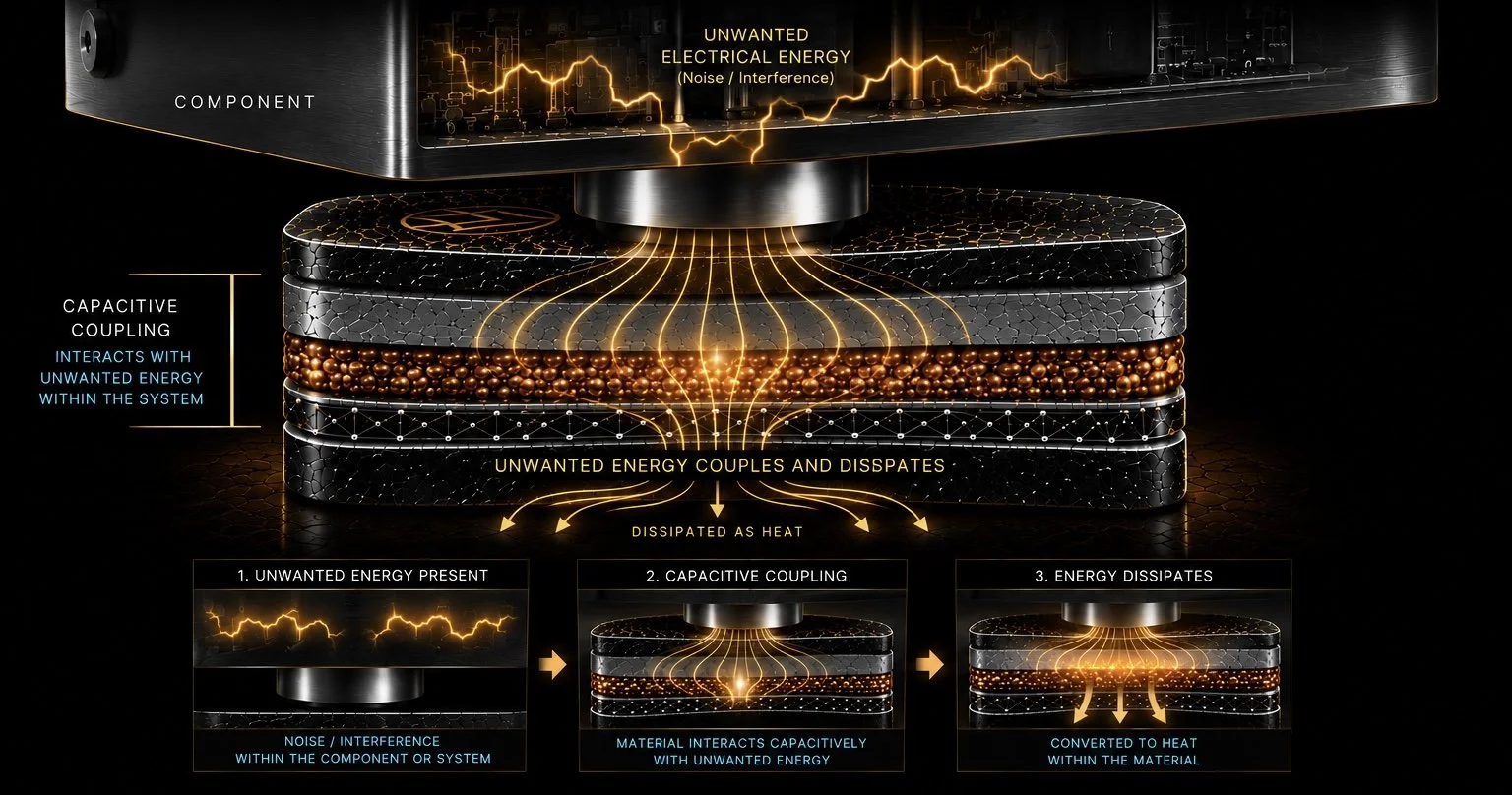
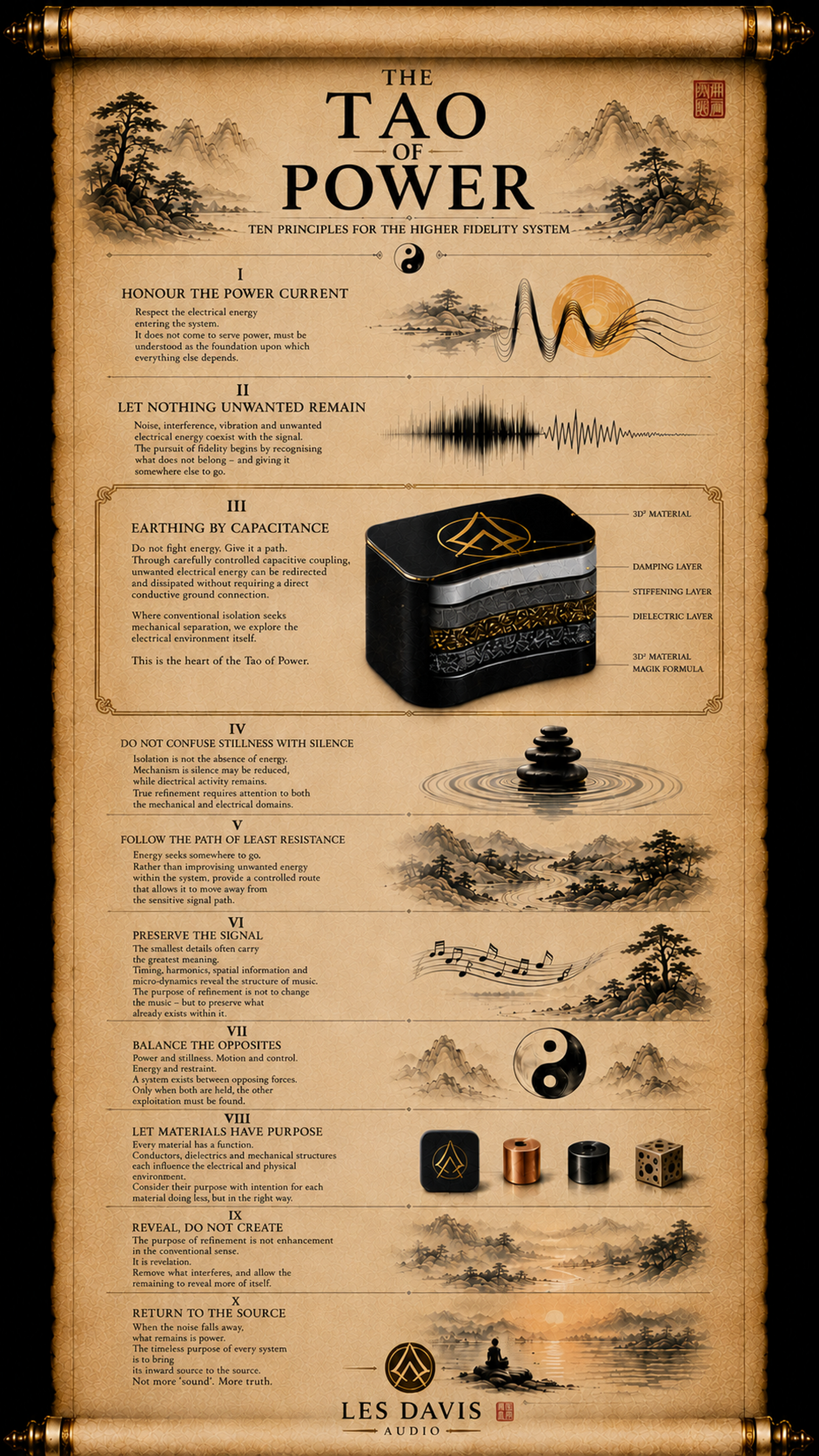
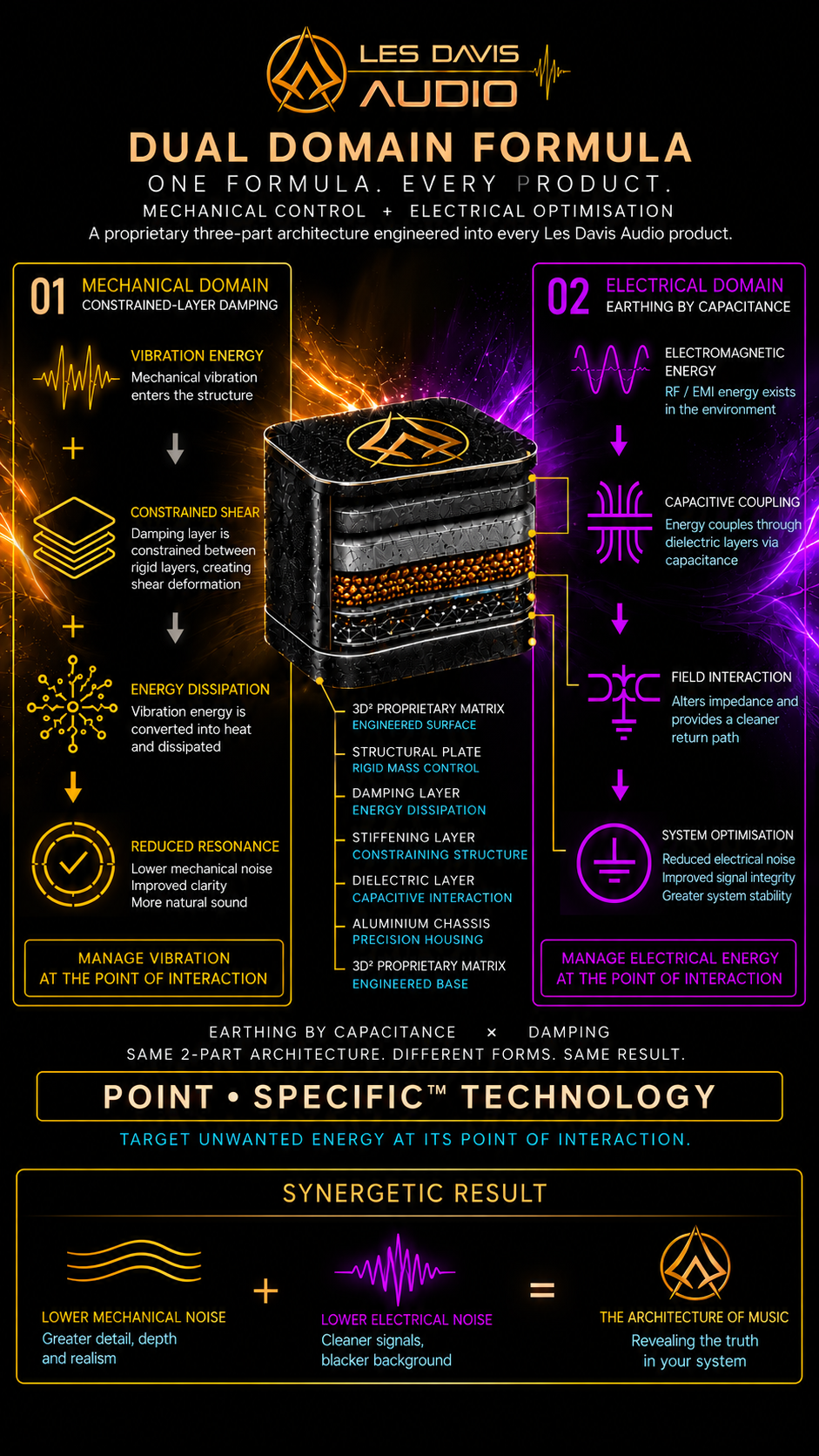
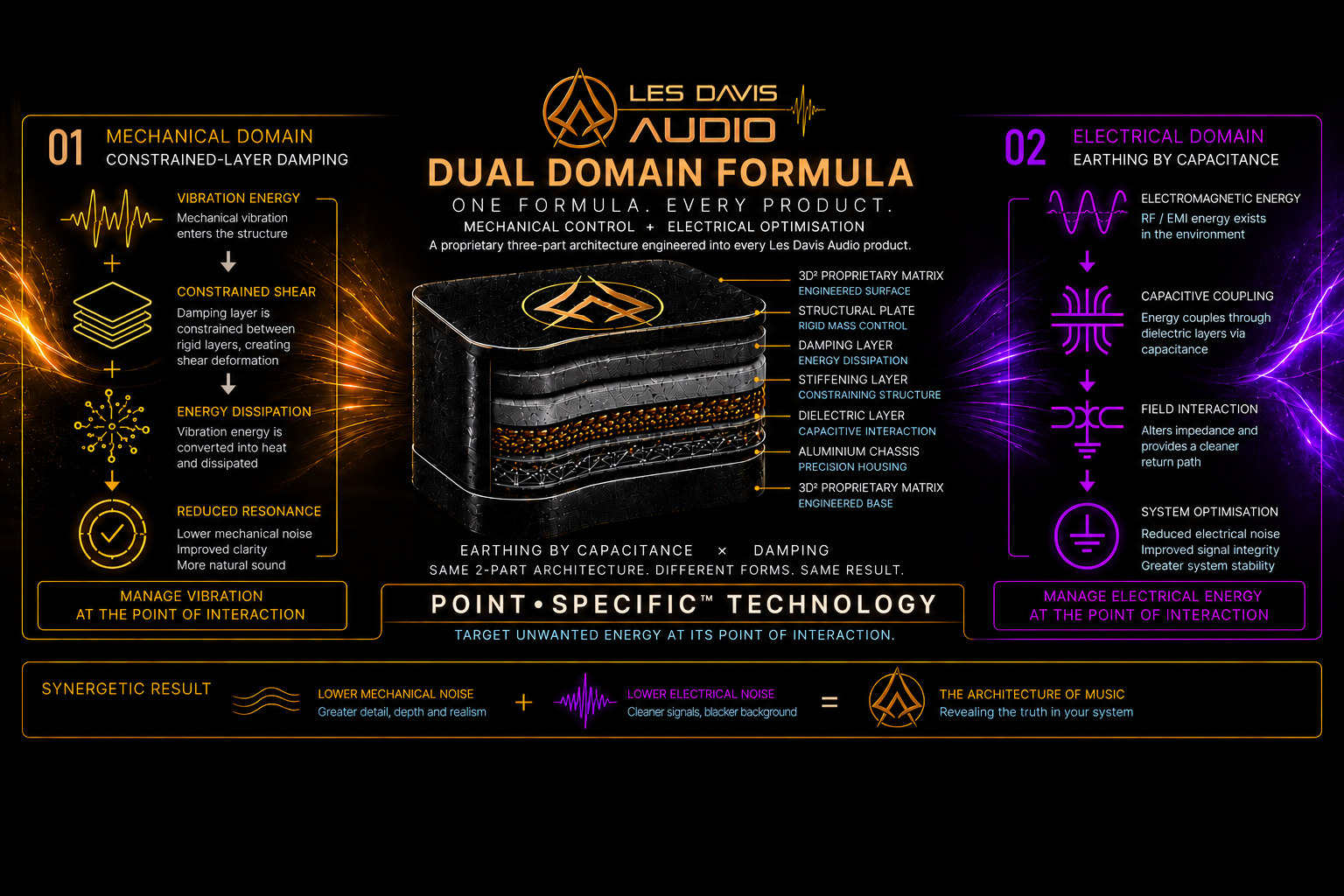
The patented 3D² material simultaneously works both on the mechanical and electrical domains of our much loved Hi-Fi system. 3D² multi-layer construction dampens mechanical vibration through constrained-layer interaction; with its electrically differentiated, self-insulating layers creating a distributed capacitive structure capable of coupling with unwanted energy already present within the system. In doing so, the material can interact with electrical fields, temporarily store energy and provide pathways through which unwanted energy can be redirected toward dissipation. Effectively earthing the unwanted noise.
3D² ARCHITECTURE
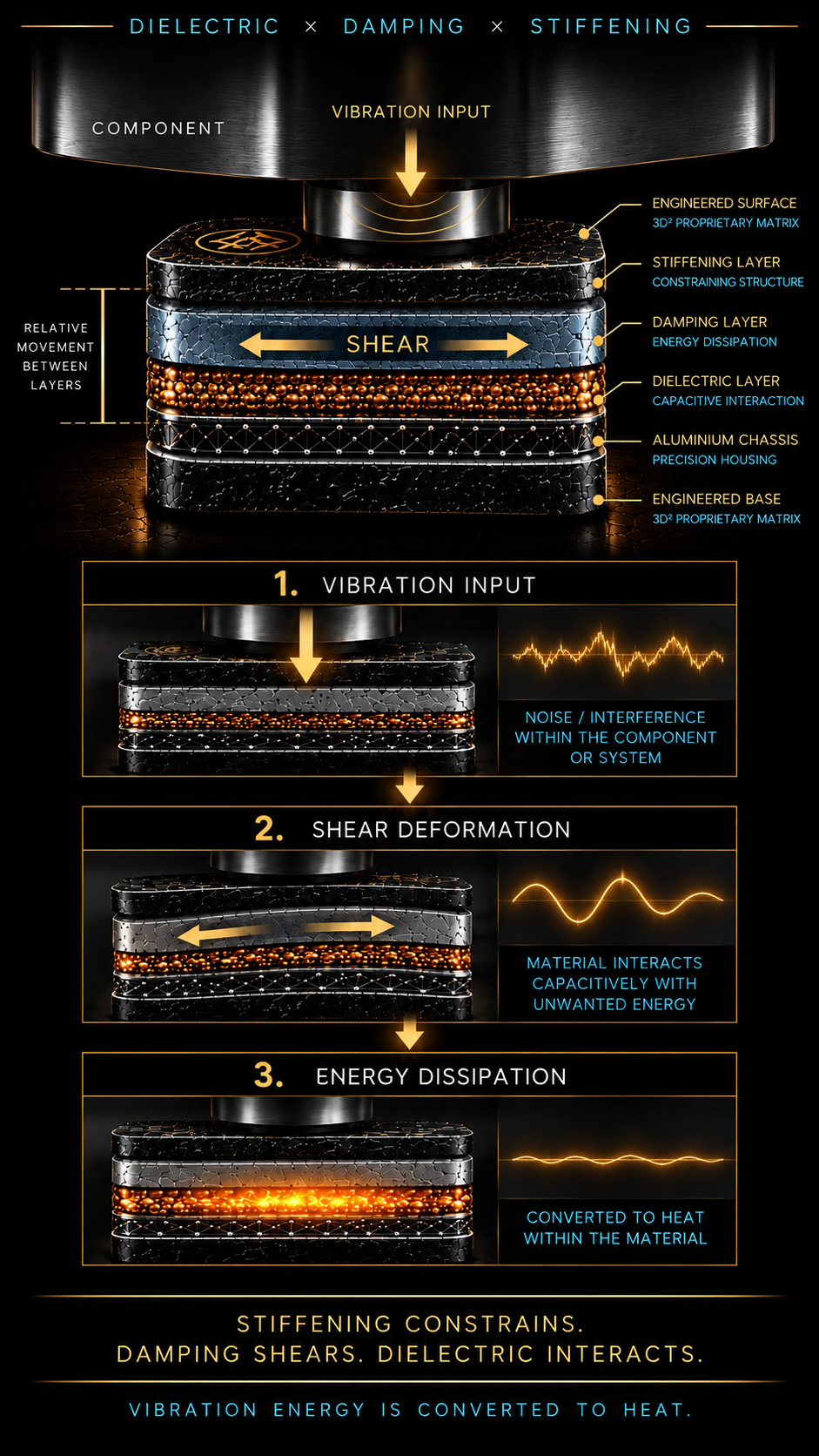
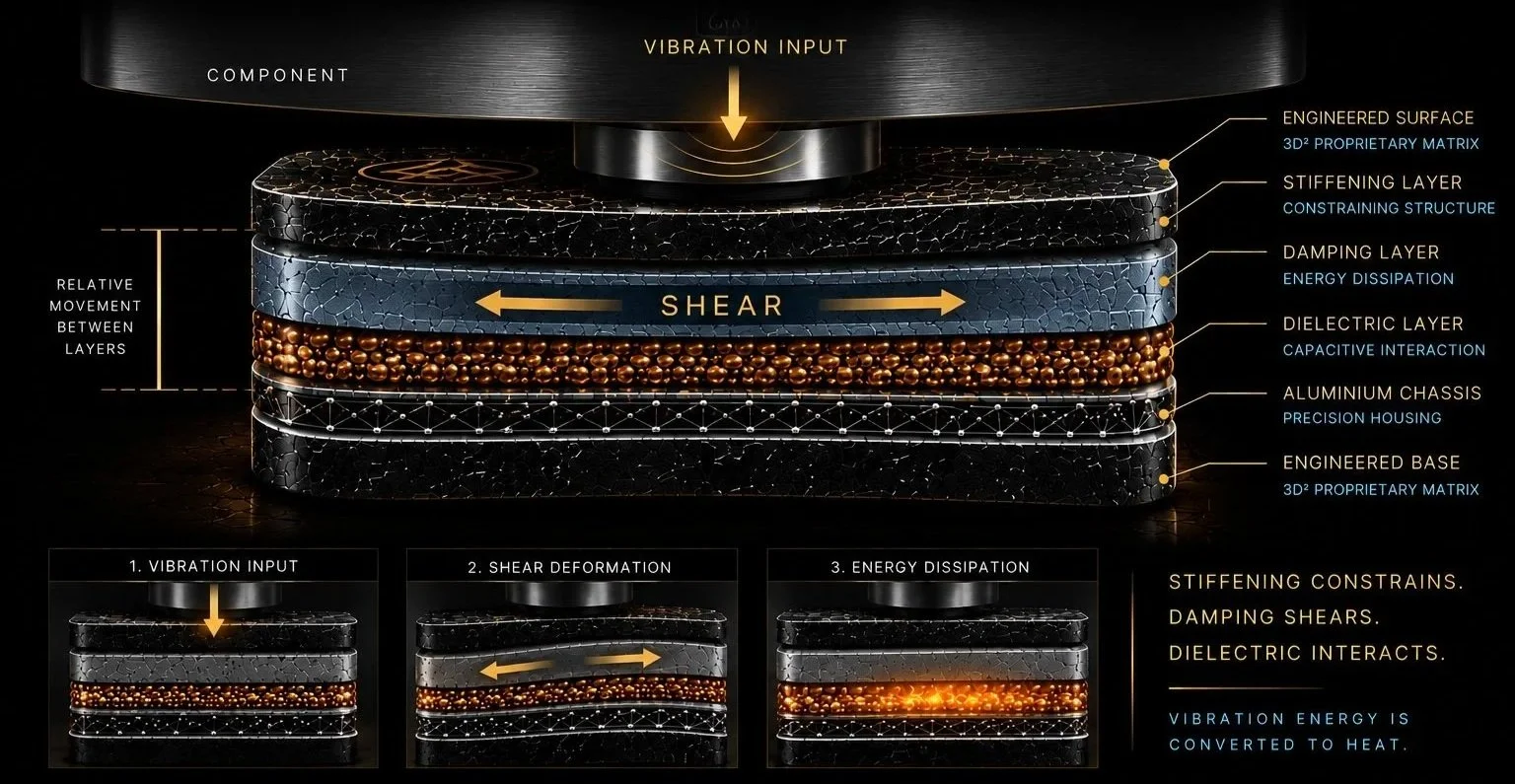
DAMPENS MECHANICAL VIBRATION
Through constrained-layer interaction, mechanical vibration causes relative movement between layers. This creates internal shear, converting a portion of vibrational energy into heat.
ACTS AS A DISTRIBUTED CAPACITIVE STRUCTURE
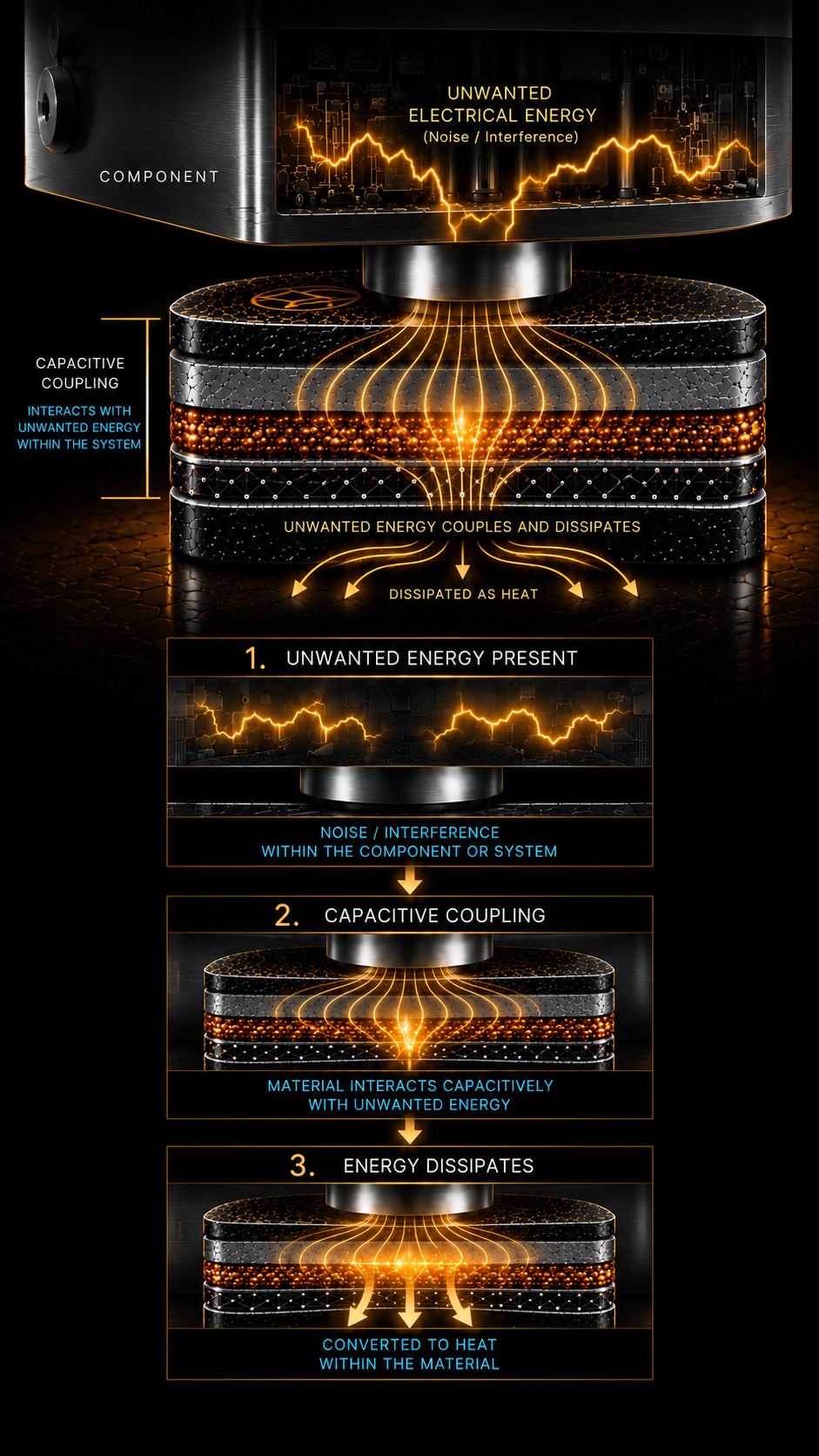
The material's electrical properties allow it to interact capacitively with unwanted energy already present within the component or system—particularly energy seeking an available pathway through which to move or dissipate.
COUPLES WITH UNWANTED ELECTRICAL ENERGY
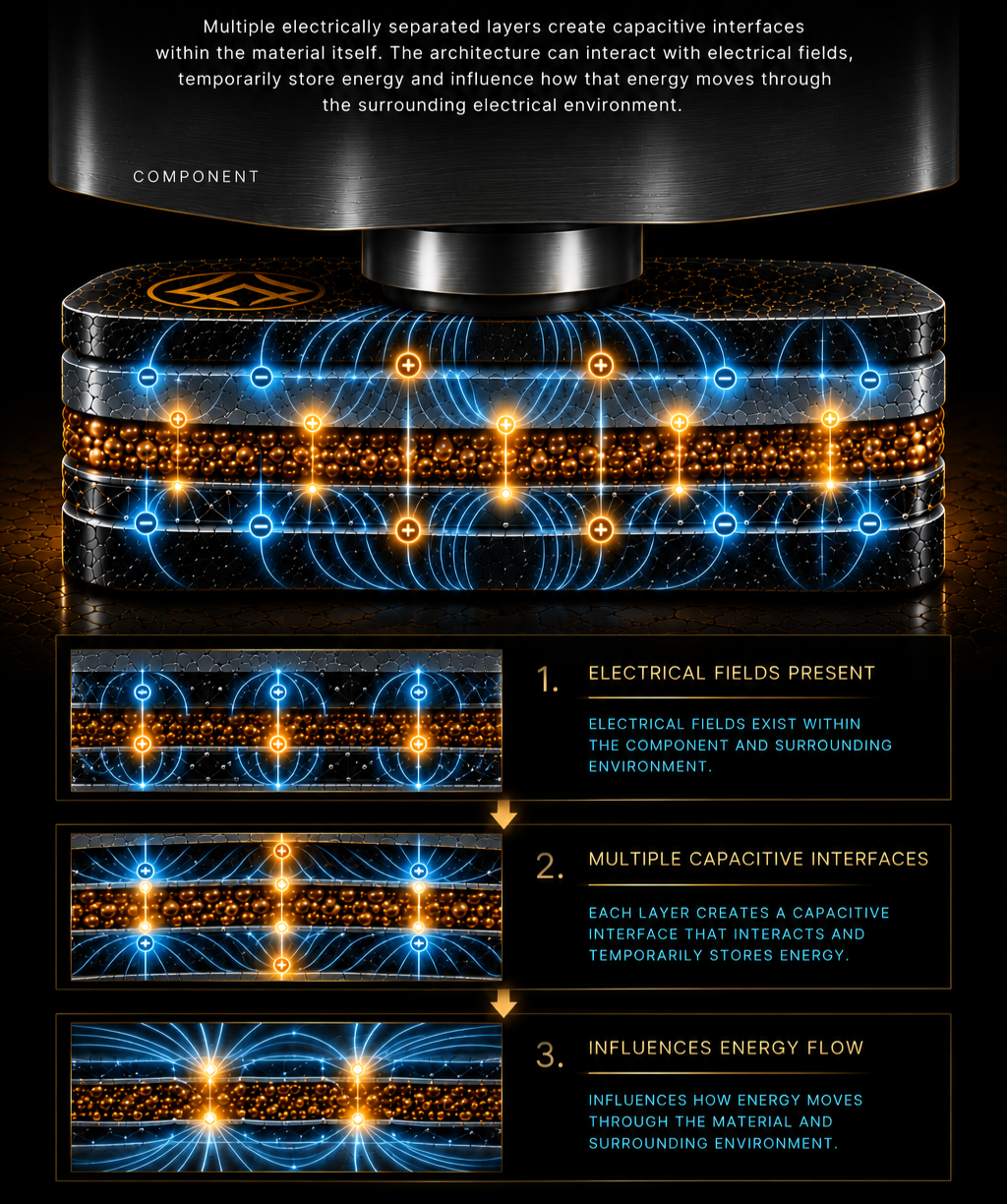
Multiple electrically separated layers within the 3D² material create a network of capacitive interfaces throughout its structure. Rather than behaving as a single capacitor, the material acts as a distributed electrical architecture, with capacitance occurring across multiple adjacent surfaces and material boundaries.
When exposed to electrical fields surrounding a component, these interfaces can become electrically coupled to that environment. Energy associated with those fields can be temporarily stored across the material's capacitive interfaces, changing the way electrical energy is distributed and moves within the immediate environment.
The result is not a direct conductive connection or conventional electrical circuit. Instead, interaction occurs through the electric field itself—allowing the material architecture to influence electrical energy without requiring current to flow directly through the material.
ALONG THE ‘PATHWAY TO PURITY’
-
What is set in motion continues to speak.
Notes linger too long, blurring timing and masking detail.
-
When the path is disturbed, truth changes shape.
Tone hardens, timbre changes and natural textures are lost.
-
Where energy cannot flow, it accumulates.
The sound becomes constrained, less open and less dynamic.
-
What cannot escape returns.
Transients smear, focus softens and spatial information becomes confused.
-
When the connection adds to the noise, the signal is no longer alone.
Fine detail is masked and the natural ease of music is diminished.
-
What cannot flow begins to stagnate.
The sound grows muddy. Clarity loses its way.
-
Without order, energy drifts toward chaos.
Coherence fades, detail disappears and the music loses its natural form.
-
Before sound becomes a wave within your music room, it is first an electrical signal travelling throughout the inside of the Hi-Fi system.
-
Every Hi-Fi system exists within two environments.
The first is external: the listening room, its dimensions, surfaces and acoustics.
The second is internal: the electrical and mechanical environment within the system itself.
-
The Les Davis Audio philosophy is that any component, now matter how big and flash, all have the same Achilles heel. There are inherited problems in the designing of a speaker-box crossover, to the grounding/power-reference in every* speaker and amplifier.